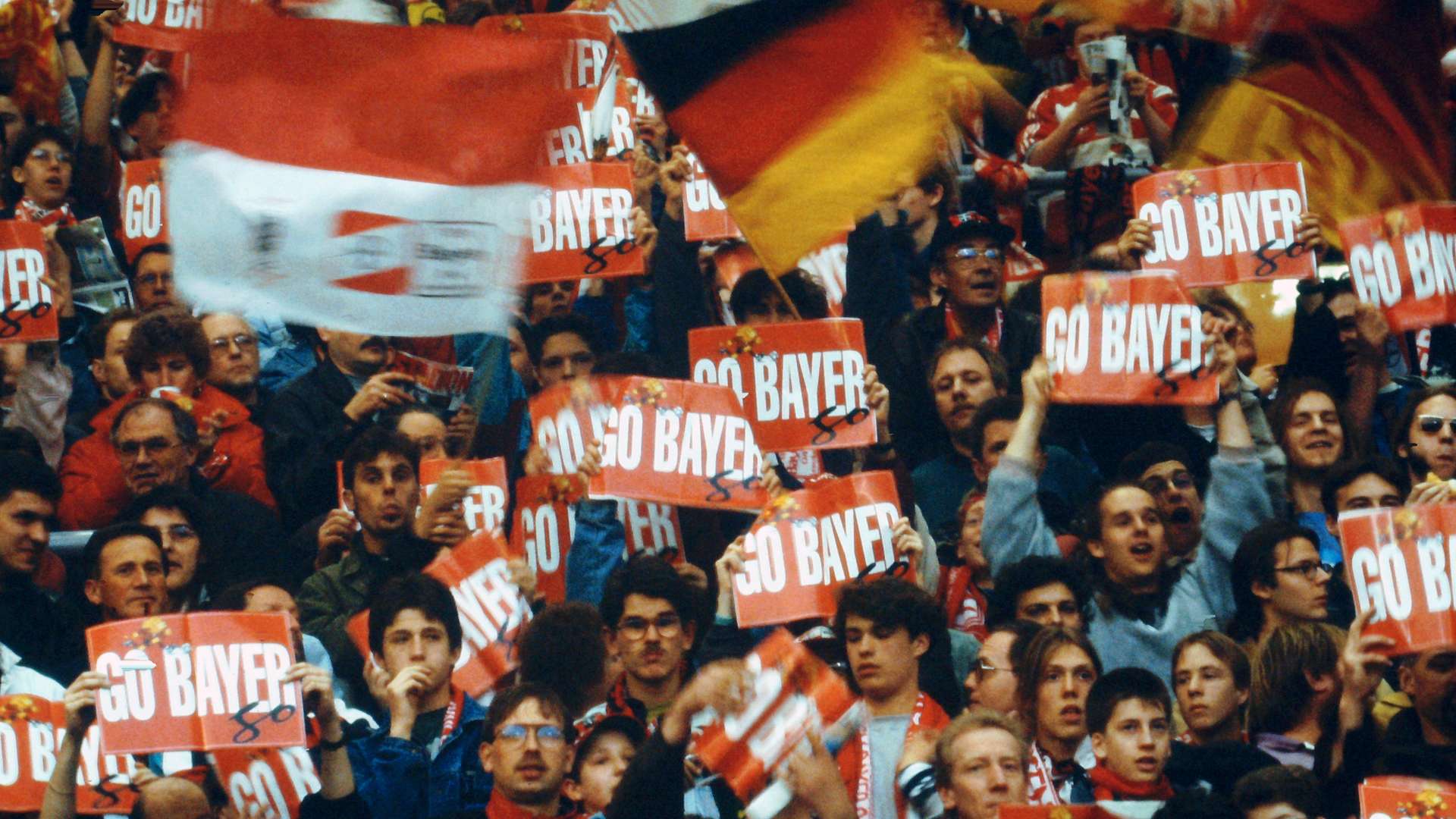
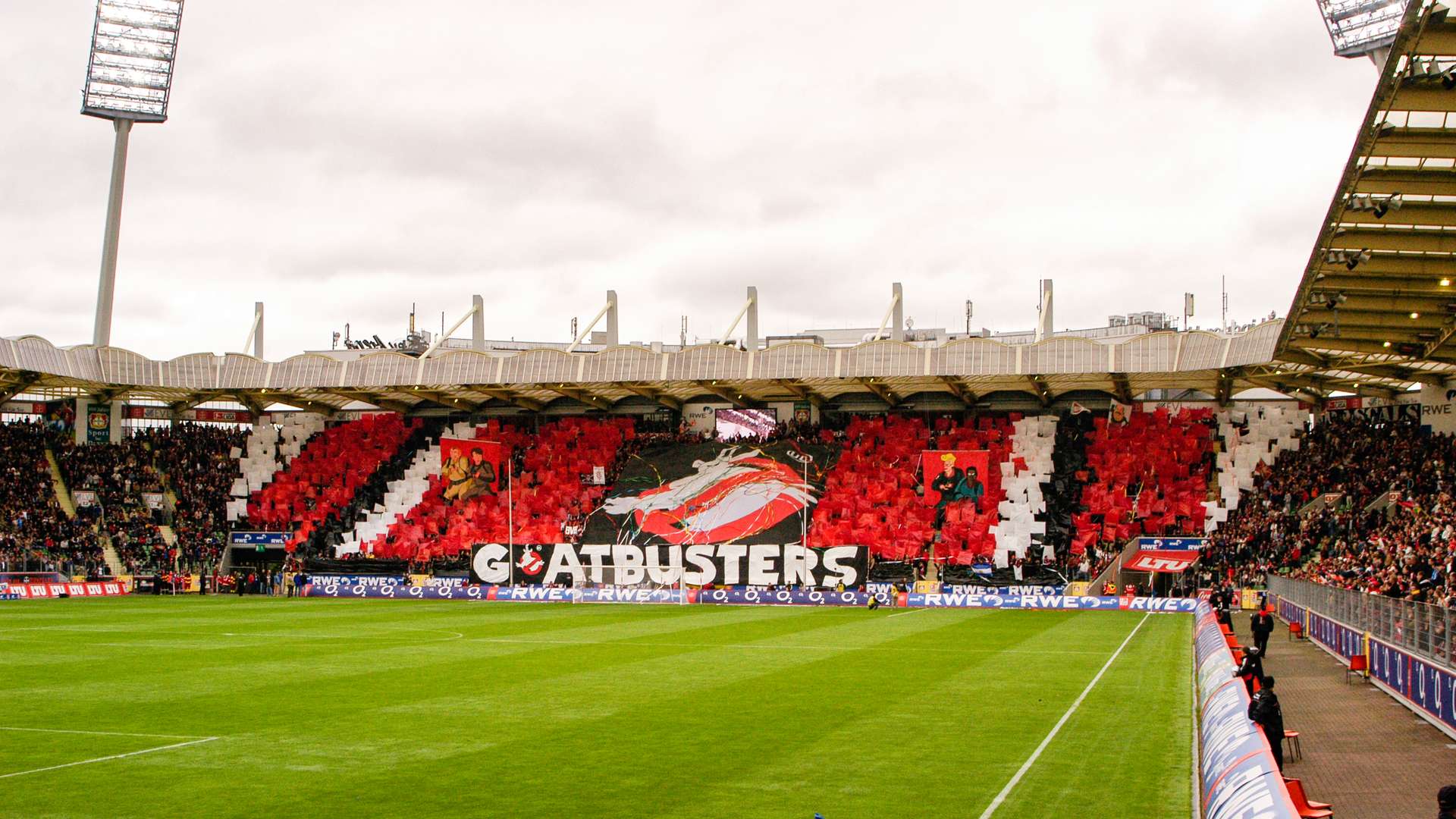
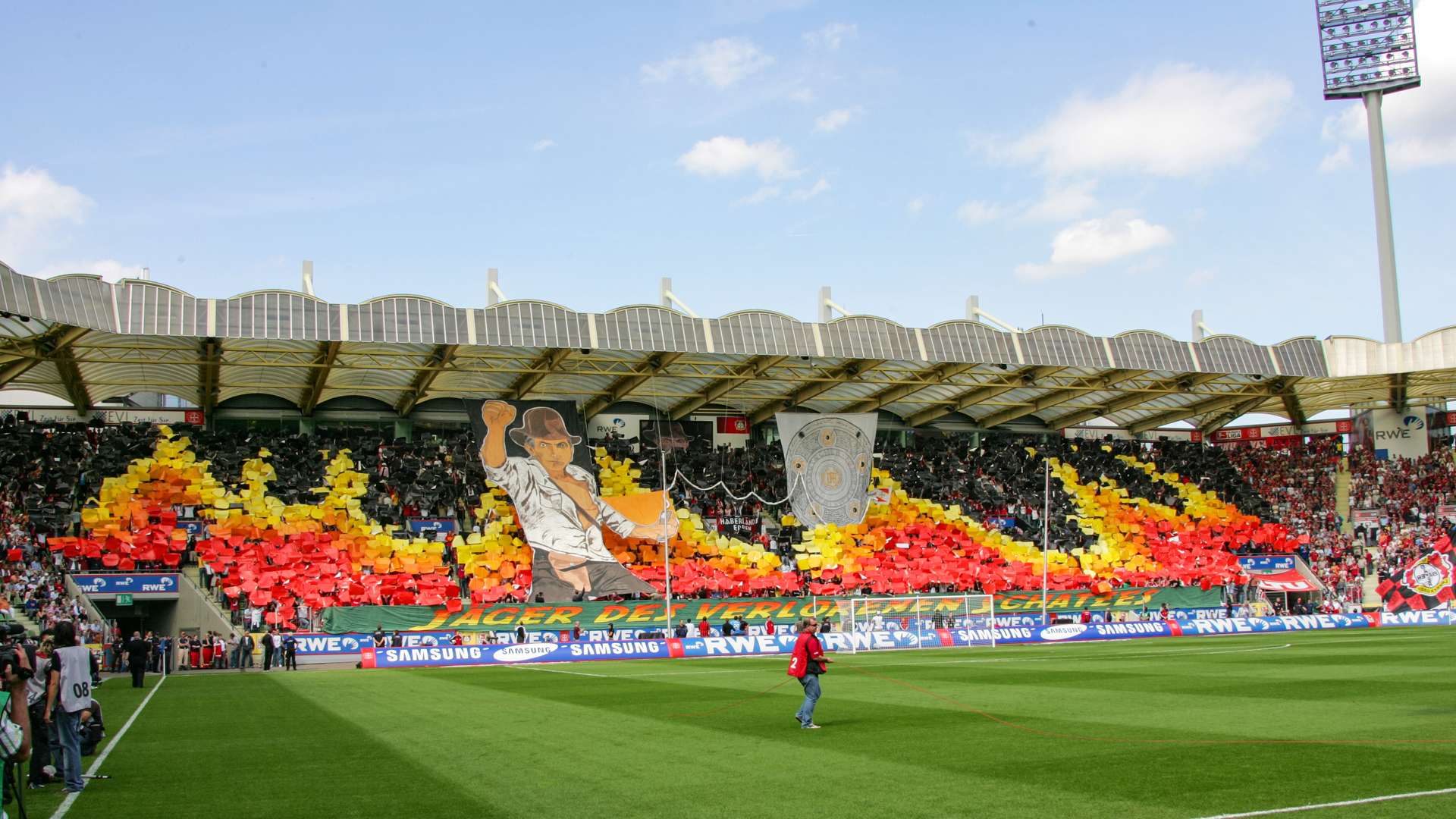
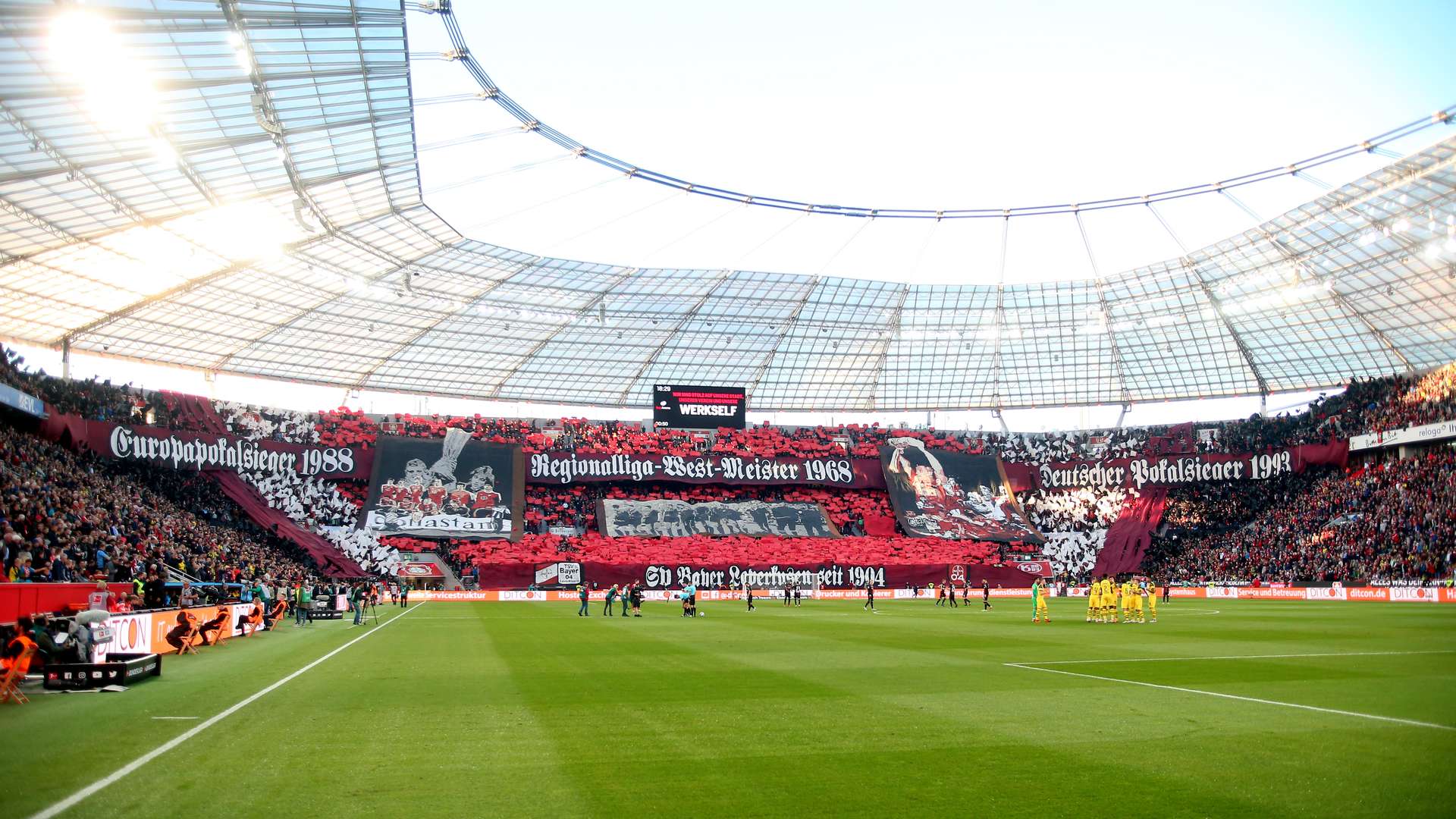
In my research of that event I came across the wonderful 'Alle beide' podcast by Nordkurve12 that included the story of the 'first' example of choreography. The Bayer 04 website also sees this choreography with black and red strips of foil in the big words painted on cardboard of 'Danke Markus Munch' as one of the first in Germany and definitely at Leverkusen. Confirmed in my opinion, I hoped visiting the Internet presence of the Leverkusen Ultras might provide one or two ideas about how this choreography came about – and I read the following: "The first choreography was in 1994 at the UEFA Cup match against the Italian team AC Parma when thousands of little flags were distributed with the help of the sponsor." Okay, that doesn't count as pure fan choreography.
Further on in the story: "There was the first choreography without the support of the club or a sponsor in the same year (1996!!! My comment). In the match against Bayern Munich, red and black banners covered the whole of the North Stand." 1996? That made me wonder and I did some research. The home game against FC Bayern in 1995/96 was on matchday 24, that is 23 March 1996. I don't find any images, I looked at the video of the game on the media portal and when the teams came out there lots of bits of white paper and lots of fans but no black and red banner. Somewhat confused, I read on: "The first initiative planned and implemented by AK Stimmung (a working party set up by Bayer 04 fans in the 90s to improve the atmosphere at the stadium, my comment) was at the derby against FC Köln in 1996." I'd never heard about that choreography. Back to the media portal and there I discovered: In the video of the match you could see Bayer 04 fans before kick-off with A3 sheets of paper in Black and Red in their hands. I checked it out with the Ultras Leverkusen and I was given two pictures that confirmed a choreography carried out using cardboard.


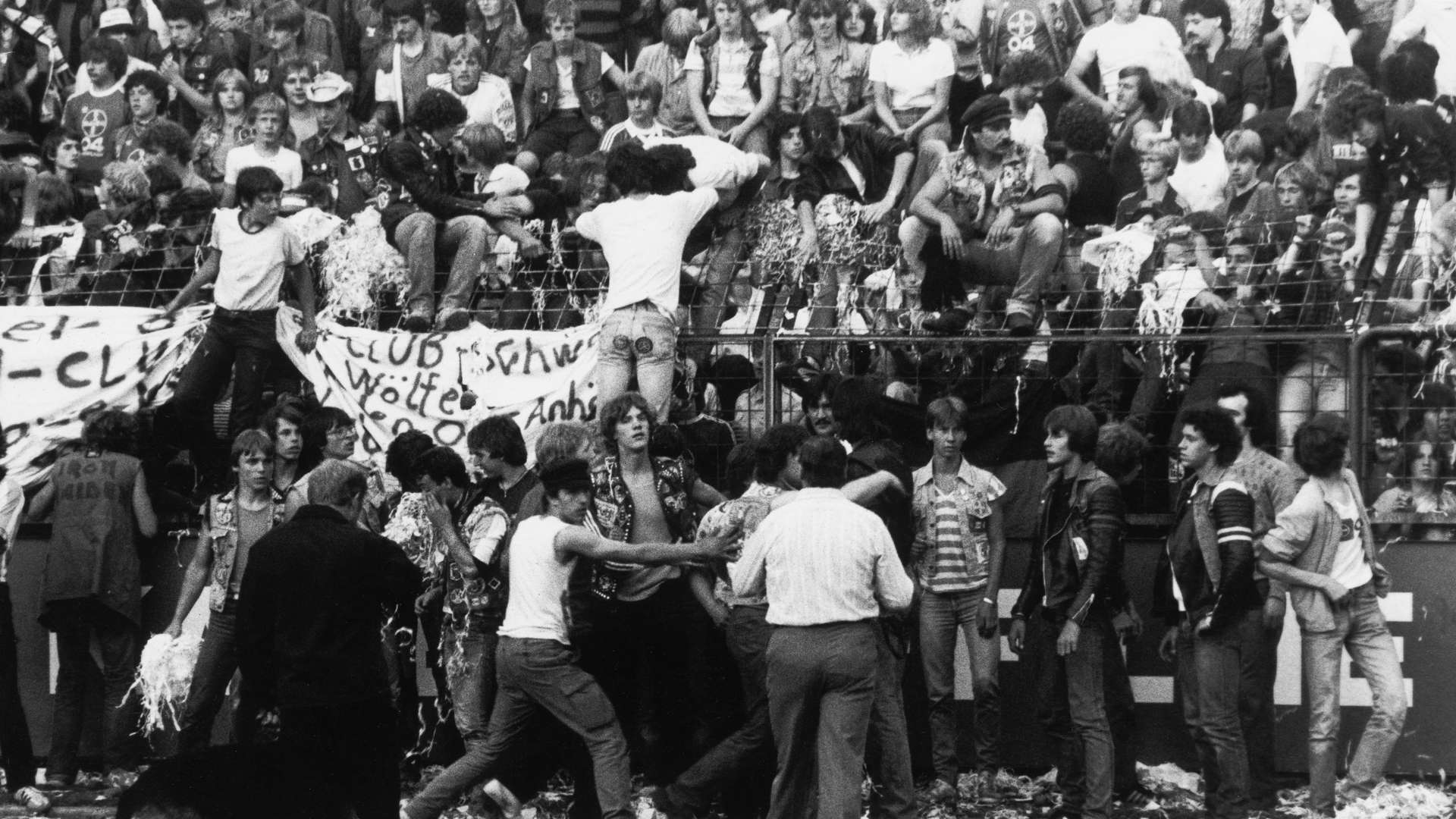
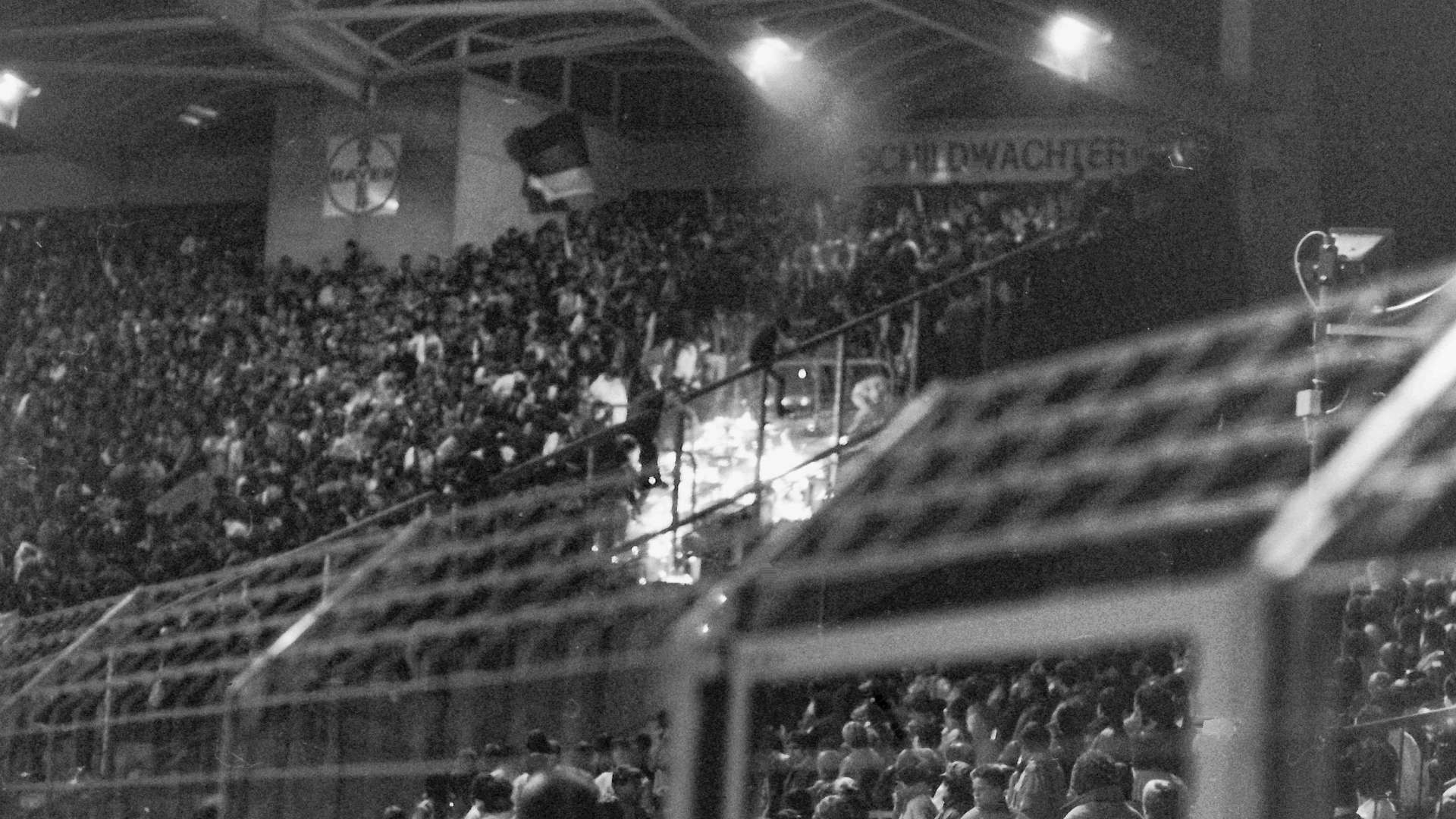
Now I wanted to find out exactly what had happened and I looked at lots of photos and videos. My conclusion?! Fans went to the stadium in the 1950s with flags. There was little change to the use of flags long into the 70s. At the end of the 70s shredded paper accompanied the flags. The home end look like a white sea in the play-off match in 1982 against our friends from Kickers Offenbach. Unfortunately, it got out of hand in the home game against FC Toulouse in 1988: Some clever dicks wanted to improve the atmosphere and decided to set the shreds of paper alight and it took a while before the fire was put out. Shredded paper has been banned since that match. The first breathtaking atmosphere came on 18 May 1988 at the UEFA Cup final with the distribution of lots of flags throughout the stadium paid for by the club. For the first time, the spark went from the stands onto the pitch and produce an incredible atmosphere at the Ulrich Haberland Stadium that almost lasted the whole 120 minutes plus penalties.
Talking about sparks, agreed pyrotechnic events were possible from the start of the 90s as with the presentation of the new shirt from Talcid at the home game against FC Bayern in February 1991. The initiative in the home game in the UEFA Cup semi-final against AC Parma, as described above, was financed by a sponsor. Now came the first real choreographies at Leverkusen. I think the cardboard signs at the home game against FC Köln on 30 November 1996, matchday 16 in the 1996/97 season, should be seen as the first choreography carried out by the fans and not, as previously assumed, the one with the Black and Red banners on 9 March 1997 against FC Bayern. So there's no 25 years of choreography at Leverkusen as I'm coming three months too late. Instead, we can now celebrate 30 November 1996 as the birth of choreography under the Bayer Cross.
Jacek Krzynowek was born on 15 May 1976 in Kamiensk, Poland, and grew up as a typical country boy. He spent his childhood less in structured training sessions and more on simple pitches, where he spent hours playing football with older boys. He realised early on that he had exceptional shooting power and enormous stamina. But for a long time, he didn't appreciate just how much talent he had. While others dream of a great career, professional football initially seems like a distant world to him that he only knows from television.
Show more
Carsten ‘Calle’ Ramelow was born in Berlin on 20 March 1974. He began his football career in the youth teams at Tasmania 73, Tennis Borussia, SC Siemensstadt and, last but not least, Hertha Berlin. It was here that he reached the DFB Pokal final in 1993 with the Hertha Bubis team, the amateur team at Hertha Berlin, against his future employer Bayer 04 Leverkusen. But even he was unable to prevent the Werkself's 1-0 victory thanks to a goal from Ulf Kirsten.
Show more
The 1995/1996 season brought some innovations. For the first time, each player was given a squad number with his name printed on the back of the jersey. For the first time, coaches were allowed to make three substitutions and for the first time, three points are awarded for a win. And for the first time, I am no longer my team's number 1. I wear it on my back, but Dirk Heinen has taken over me in goal. So at first I sat on the bench a bit offended, but in the Rückrunde I realised I also had to make my contribution to the success of a team.
Show more
In this video you can see impressive and important goals in the history of Bayer 04 from the month of May. It's not always about the beauty of the goals, but also a reminder of special games and players.
Show more
Bayer 04 Leverkusen, promoted to the Oberliga West, welcome VfL 99 Köln for the last game of a successful season. This time, the crowd of just 2,000 spectators saw more of a friendly than a championship match. Little fight, little goalmouth action and few moves in midfield to warm the hearts of the spectators. It takes a corner to give Bayer 04 the lead. Peter Röger is on hand with his head and nods home on 43 minutes for the half-time lead. When Karl-Heinz Spikofski increased the lead to 2-0 a quarter of an hour after the restart, the result was settled. The team from Cologne were able to reduce the deficit to 2-1 in the final minute, but in the end the spectators went home looking forward to the first season for a Bayer 04 team in Oberliga West 1.
Show more